
Arkansas Primary Care
Arkansas is a place where primary care still means primary — with the scope of practice you went to medical school to learn, communities that genuinely need physicians, and a quality of life that lets you actually live one. The case for training here is honest, and it’s worth your consideration.
Meet the ProgramsReal Medicine
Arkansas trains physicians across the full primary care spectrum — family medicine, internal medicine, pediatrics, internal medicine-pediatrics, obstetrics and gynecology, and emergency medicine. Each specialty here keeps a scope of practice that’s been narrowing nationally. You don’t have to give up the breadth of medicine to practice it.
In states where the physician workforce is plentiful, scope of practice naturally narrows — specialists handle specialty work, hospitalists run inpatient services, OB/GYNs deliver babies. In Arkansas, with significant physician shortages across the state, primary care physicians often handle the full breadth of what their specialty was originally designed to cover. That’s a training advantage you can feel from the first month of intern year.
Training across the specialties
Family Medicine. Full-spectrum training that’s increasingly rare. Arkansas family medicine residents still do the things family medicine physicians used to do everywhere — continuity OB from prenatal through delivery, inpatient services, procedural medicine, and point-of-care ultrasound integrated into curriculum. Several programs offer dedicated rural training tracks with rotations in critical access hospitals.
Internal Medicine. Strong inpatient training paired with continuity clinic. Subspecialty exposure across cardiology, pulmonology, gastroenterology, nephrology, and hospital medicine. Programs maintain robust fellowship placement records for residents who pursue subspecialty training, while preparing those who choose primary care for the full breadth of adult medicine.
Pediatrics. General pediatric training with exposure to community, hospital, and academic settings. Arkansas Children’s Hospital — the only children’s hospital in the state — anchors high-acuity training and pediatric subspecialty rotations. Residents see the full range of pediatric care, from well-child visits to critical care, often in the same week.
Internal Medicine-Pediatrics. Four years of combined training that prepares physicians to care for patients across the lifespan. Particularly strong for residents drawn to transitional care for adolescents and young adults with chronic illness, rural full-spectrum practice, or hospital medicine across age groups.
Obstetrics and Gynecology. Comprehensive surgical and obstetric training across both academic and community sites. Robust volume in vaginal and operative deliveries, gynecologic surgery, and continuity prenatal care. Arkansas programs serve communities with significant maternal health needs, which translates to meaningful clinical exposure and the opportunity to practice obstetrics at the scope it was designed for.
Emergency Medicine. High-acuity, high-volume training across urban academic emergency departments and community sites. Critical exposure to trauma, resuscitation, procedural skills, and the realities of frontline care for an underserved state. Many emergency medicine residents in Arkansas describe training here as more hands-on, with earlier autonomy, than they experienced as visiting students at peer institutions.
Real Impact
Arkansas has a significant primary care physician shortage, well below the national average per capita, with the disparity starker in rural counties and the Delta region. For physicians who want their work to genuinely matter, to communities that visibly need them, Arkansas is one of the most direct opportunities in American medicine.
The shortage, in concrete terms
- Approximately 68% of Arkansas counties are designated Health Professional Shortage Areas by HRSA.
- Arkansas had approximately 58 primary care physicians per 100,000 residents in 2023, well below the national average of 68 per 100,000.
- 26% of Arkansas’s primary care physicians were 60 or older as of 2022, raising concerns about future workforce supply as many approach retirement.
- The Delta region — including counties along the Mississippi River — has some of the most severe physician shortages in the country.
Primary Care Physician Perspective
The numbers tell one story. The day-to-day experience tells another. Arkansas primary care physicians describe practicing here as different from peer states. They see more complex patients with fewer specialty backup options, which means they handle more themselves. That’s hard work. It’s also the kind of work many physicians describe as the reason they went to medical school in the first place.
Loan repayment and financial support
Arkansas’s physician shortage is met with one of the more substantial loan repayment infrastructures in the country. Federal and state programs can stack to provide meaningful relief on medical school debt, often in the range of $100,000 or more over a several-year service commitment.
- NHSC Loan Repayment Program — federal program offering up to $80,000 for primary care providers in exchange for two years of service at an approved Health Professional Shortage Area site. Continuation contracts can extend the relief beyond the initial term.
- NHSC Students to Service Loan Repayment Program — for medical students in their final year of school, providing up to $120,000 in loan repayment in exchange for three years of full-time service at an approved HPSA site.
- Arkansas Community Match Rural Physician Recruitment Program — state program offering $20,000 per year for four years (total $80,000) for primary care physicians who practice in qualifying rural Arkansas communities (population under 20,000 and at least 20 miles from a larger city). Funds can be used for student loans or any other purpose.
- Federal-state combinations — in some cases, NHSC awards and Arkansas state programs can be combined for substantially greater total repayment than either alone.
Real Life
Quality of life in Arkansas often surprises residents, particularly those who arrive expecting otherwise. This is part of why physicians who train here stay.
Cost of living that lets you actually live
Arkansas’s cost of living is among the lowest in the country, particularly for housing. One-bedroom apartments in walkable urban neighborhoods near residency programs rent for roughly $800 to $1,200 per month, and the statewide average rent runs about 25% below the national average. Median home prices across Arkansas residency-program cities are well below the national median, putting first-time homeownership within realistic reach for residents who want it. The cost-of-living difference compounds. Residents in Arkansas often save money, build equity, or pay down loans during training — financial trajectories that are genuinely difficult in higher-cost markets. Combined with state and federal loan repayment programs, the math of training in Arkansas can be substantially different than the typical residency experience.
Arts, culture, and the surprise of place
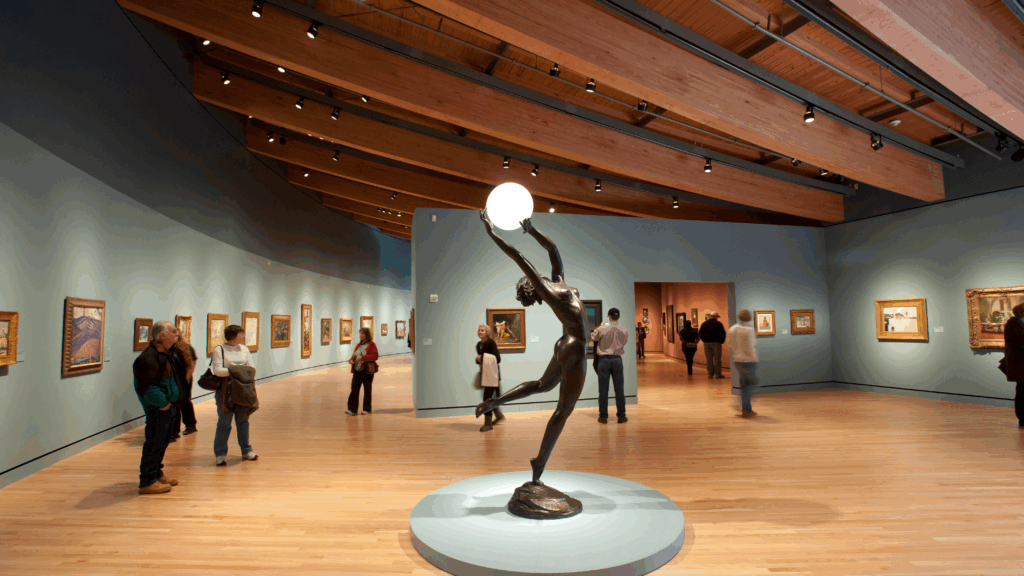
Arkansas’s cultural landscape is more substantial than most students expect.
In Little Rock, the Arkansas Museum of Fine Arts anchors a growing downtown arts district, while theaters, galleries, and live music venues contribute to a vibrant capital-city scene. In Northwest Arkansas, Crystal Bridges Museum of American Art has become one of the country’s most significant art museums, alongside its contemporary art companion, The Momentary. The Walton Arts Center brings Broadway productions and nationally touring performers to the region.
In south Arkansas, the Murphy Arts District in El Dorado has transformed downtown El Dorado into a regional entertainment destination, anchored by an outdoor amphitheater, an indoor music hall, a cabaret stage, a two-acre playscape, and a seasonal farmers market spread across multiple downtown blocks. In the Delta, the King Biscuit Blues Festival draws blues enthusiasts from around the nation and the world to historic Helena.
The food scene has grown alongside the arts. Independent restaurants, coffee shops, breweries, farmers’ markets, and locally owned businesses can be found in communities throughout Arkansas. Arkansas chefs have earned recent national recognition from the James Beard Foundation, including nominations in the Best Chef: South category, reflecting a serious independent restaurant culture. Communities across the state offer an increasingly diverse mix of dining, arts, and entertainment options.
The Natural State
Arkansas is called the Natural State, and it earns the name. The landscape changes dramatically across the state — Ozark mountains in the north, river valleys and Ouachita peaks in the west, pine forests in the south, and the Mississippi Delta to the east. Wherever you train, the outdoors is close.
The outdoors that nobody tells you about
Two national treasures anchor it. Hot Springs National Park is the only national park inside a city in the United States, with thermal waters and forested trails right from downtown. The Buffalo National River — the first designated national river in the country — runs 135 miles through the Ozarks with floating, hiking, and elk viewing that draw visitors from across the country.

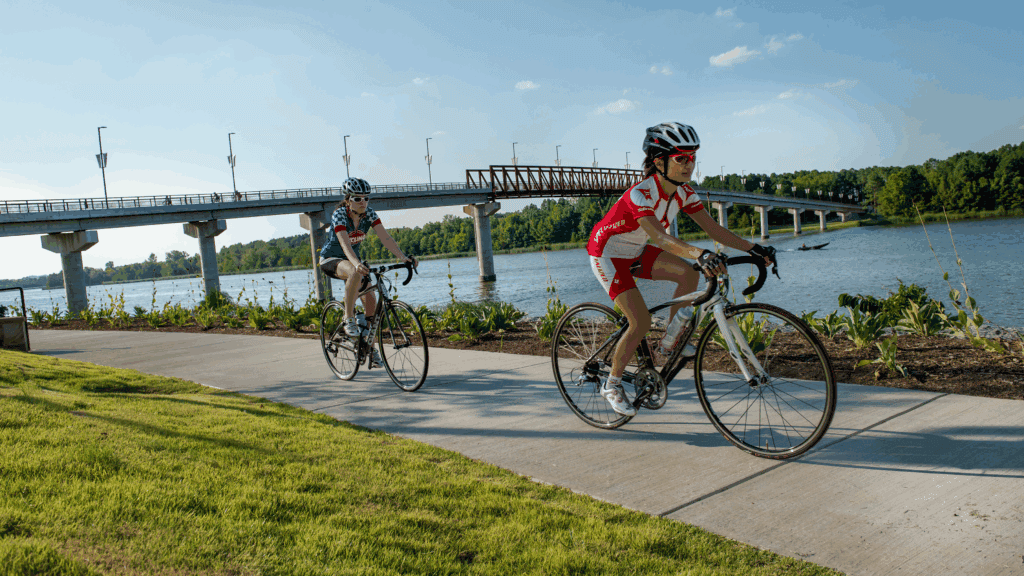
Beyond those, the breadth is what surprises people. World-class mountain biking in Northwest Arkansas. Dozens of state parks across the state, from mountain ridges and waterfalls to cypress-lined lakes and Delta wildlife refuges. Some of the best fishing and waterfowl hunting in the country. Paddling on the Mississippi, the Arkansas River, and dozens of lakes and creeks in between.
For residents who need to decompress from clinical work — and they all do — Arkansas’s outdoors are part of the appeal of training here. A post-call hike, a Saturday float trip, a Sunday at the lake, these aren’t aspirational vacation activities here. They’re built into normal life.
The honest case
If you’re seriously considering Arkansas, you probably have questions that recruitment brochures don’t usually address. We’d rather address them directly. The answers below reflect what current residents and recent graduates actually say when asked.
Will my training be respected outside of Arkansas?
Arkansas program graduates regularly match into competitive fellowships, take academic appointments, and practice across the country. Where you trained matters less in the long arc of a medical career than what you learned to do while you were there. Arkansas training tends to be hands-on, full-scope, and confidence-building — the kind of preparation that travels well wherever you go next.
What about the political environment?
Arkansas is a conservative state, and its politics are unlikely to change dramatically in the near term. For some physicians, that’s a meaningful consideration, particularly for those whose work or identity is affected by state policy. We’d encourage you to look honestly at current Arkansas law and decide whether you can practice the medicine you want to practice within those constraints. Many physicians do, and find meaning in the work. Others choose to train elsewhere. Both are reasonable conclusions.
It’s also worth knowing that Arkansas physicians aren’t passive in this environment. State specialty chapters — the Arkansas Academy of Family Physicians, the Arkansas Chapter of the American College of Physicians, the Arkansas Chapter of the American Academy of Pediatrics, the Arkansas Section of ACOG, and others — actively engage in health policy at the state legislature, advocating for evidence-based care, patient access, and the conditions physicians need to practice well. The Arkansas Medical Society, which represents physicians across every specialty, has been advocating at the state Capitol since 1875 and continues to be a meaningful voice in shaping legislation that affects Arkansas patients and providers. Residents who want to be involved in health policy will find established structures, mentors who’ve done the work, and genuine opportunities to contribute.
On a personal level, the communities where Arkansas residency programs are located are generally welcoming, and the medical community in particular tends to be inclusive across political and personal differences. Whatever brings you here, you’ll find people who share that path.
Will I fit in if I’m not from Arkansas or the South?
Arkansas residency programs are home to physicians from across the country and around the world, training alongside Arkansans who chose to stay. The state has a long tradition of welcoming newcomers, and the residency programs in particular are built to support residents from a wide range of backgrounds. Residents often describe the pace of life, the cost of living, and the access to community as the parts they came to appreciate most.
What if I decide it isn’t for me?
Residency is three to seven years, depending on specialty. It’s a meaningful commitment but not a life sentence. Many physicians train in Arkansas and then practice elsewhere, and many train elsewhere and come to Arkansas later. The decision you make at Match isn’t permanent. What you want it to be is a choice you can stand behind, with the information you have, at the time you make it. That’s the most that can be asked of anyone.
See for yourself
The best way to know whether Arkansas is right for you is to come see it. The Primary Care Residency Fair brings residency programs together in one place, in one day, with the medical students who are considering their next step. Free to attend. Travel assistance available for qualifying students. Real conversations with the residents and faculty you’d actually be working with. Real medicine. Real impact. Real life. Come see for yourself.
Register